IoRT Architecture, Robotics, and Security Fundamentals

- Description
- Curriculum
- FAQ
- Grade
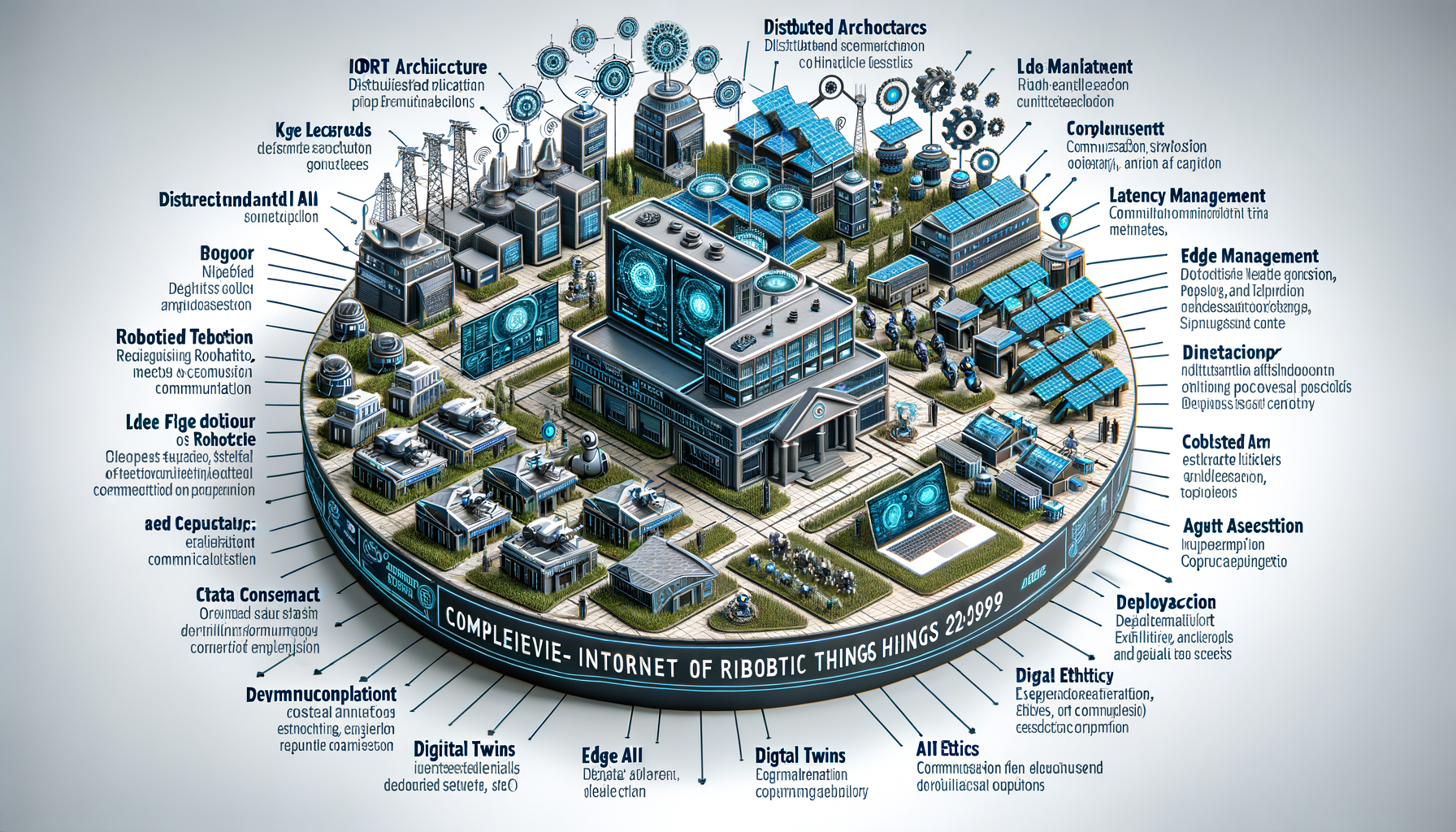
Course Overview: Internet of Robotic Things (IoRT)
This four-week course offers an in-depth exploration of the Internet of Robotic Things (IoRT), emphasizing architecture, edge AI deployment, and cybersecurity.
Week 1: Fundamentals of IoRT
Kickstart your journey by understanding the core concepts of IoRT in comparison to IoT and Cyber-Physical Systems. Engage in hands-on labs that focus on multi-layer architectures and the development of modular IoRT systems.
Week 2: Edge AI and Digital Twins
Transition into the second week with a comparative analysis of Edge AI and Digital Twins. Students will learn to deploy AI models on low-power robots, enhancing their practical skills with real-time simulations using Gazebo.
Week 3: IoRT Cybersecurity
In Week 3, students will explore the critical aspects of IoRT cybersecurity, understanding the vulnerabilities and protection mechanisms essential for secure robotic systems.
Week 4: Encryption and Responsible Robotics
The final week covers advanced encryption methods while promoting responsible robotics practices. Practical labs will solidify your knowledge and skills in these key areas.
Assessment criteria include quizzes and lab exercises, designed to reinforce learning and ensure mastery of IoRT concepts.
-
1
 IoRT fundamentals: differences between IoT, IoRT, and CPS (Cyber-Physical Systems)In this lesson, students will explore the fundamental concepts of the Internet of Robotic Things (IoRT), gaining a clear understanding of how it differs from the Internet of Things (IoT) and Cyber-Physical Systems (CPS). By the end, learners will be equipped with the knowledge to identify key characteristics and applications of each technology, enabling them to navigate the evolving landscape of interconnected systems. Join us to unravel the intricacies of these transformative technologies!
 -
2
Multi-layer architecture: sensing, perception, communication, decision, and actuation layersIn this engaging lesson, students will explore the intricacies of multi-layer architecture, focusing on the essential components of sensing, perception, communication, decision-making, and actuation. By delving into each layer, learners will gain a comprehensive understanding of how these systems interact to enable intelligent responses in real-world applications, equipping them with the foundational knowledge needed for advanced topics in robotics and automation.
-
3
IoRT communication networks: MQTT, DDS, and real-time ROS2 integrationIn this dynamic lesson, "Connecting the Future: Exploring IoRT Communication with MQTT, DDS, and Real-Time ROS2," students will dive into the foundational principles of Internet of Robotic Things (IoRT) communication networks. Participants will explore the functionalities and applications of MQTT, DDS, and real-time ROS2, gaining hands-on experience in integrating these technologies to enhance robotic communication and collaboration in real-time environments. By the end of the session, students will be equipped with the knowledge to leverage these protocols in innovative IoRT solutions.
-
4
 Establishing Publisher-Subscriber Communication Channels Between Robots Using MQTT and ROS2
 -
5
 Matching Quiz (10 questions): IoRT layers vs. functionality
 -
6
MCQ Quiz (40 questions): IoRT architecture, protocols, and device-to-cloud integration basics
-
7
Edge AI vs. Cloud AI: comparative analysis for robotic decision-makingIn this lesson, students will explore the critical differences between Edge AI and Cloud AI, focusing on their implications for enhancing robotic decision-making processes. By engaging in comparative analyses, learners will gain a deeper understanding of how these technologies impact efficiency, responsiveness, and real-time processing in robotics, equipping them with the knowledge to make informed decisions in future AI applications.
-
8
Digital twins in IoRT: simulation for predictive maintenance, optimization, and remote controlIn this lesson, students will explore the transformative role of digital twins within the Internet of Robotic Things (IoRT) by mastering simulation techniques that enhance predictive maintenance and optimization strategies. Through engaging discussions and hands-on activities, learners will gain insights into how digital twins can drive efficiency and innovation in remote control applications, equipping them with the skills to apply these concepts in real-world scenarios.
-
9
Deploying TensorFlow Lite for Gesture and Object Recognition on an ESP32 Robot
-
10
 Digital Twins and Emulated Robotics in Industry 5.0In this engaging lesson on "Exploring Digital Twins and Emulated Robotics in Industry 5.0," students will discover the transformative role of digital twins and robotics in modern manufacturing. They will learn how these technologies enhance efficiency, optimize operations, and foster innovation, while also examining real-world applications and future trends in Industry 5.0. By the end of the lesson, students will be equipped with a foundational understanding of how digital twins and robotics can revolutionize industries, preparing them for a tech-driven future.
 -
11
Matching Quiz (10 questions): Edge, fog, and cloud computing comparison
-
12
MCQ Quiz (40 questions): Digital twin architecture, TensorFlow Lite deployment, IoRT simulation
-
13
Cybersecurity architecture for IoRT: protecting distributed network endpointsIn "Securing the Future: Cybersecurity Architecture for the Internet of Reliable Things (IoRT)," students will delve into the essential principles of cybersecurity architecture tailored for the protection of distributed network endpoints. Participants will explore strategies and best practices for securing IoRT devices, enabling them to design robust security frameworks that safeguard data integrity and privacy in an increasingly connected world. Join us to empower your understanding of innovative security solutions that ensure a reliable and secure IoRT landscape.
-
14
Lightweight encryption: chaos-based encryption, TLS, and Ascon-AEAD for IoRT systemsIn this lesson, students will delve into the critical world of securing Internet of Reliable Things (IoRT) systems through the exploration of lightweight encryption methods. They will learn how chaos-based encryption, Transport Layer Security (TLS), and the Ascon-AEAD algorithm work to enhance data protection and integrity in resource-constrained environments. By the end of the session, students will be equipped with practical knowledge to implement effective encryption strategies, ensuring robust security for next-generation IoRT applications.
-
15
AI-driven intrusion detection and anomaly monitoring using sensor dataIn this lesson, students will explore the cutting-edge realm of AI-driven intrusion detection and anomaly monitoring, focusing on the innovative use of sensor data. By the end of the session, learners will gain practical skills in developing and implementing AI algorithms to identify security threats and unusual patterns, empowering them to enhance security measures in various environments. Join us to unlock the potential of AI in safeguarding our digital and physical spaces!
-
16
Securing Swarm Communication: Implementing TLS-Encrypted MQTT for Robots
-
17
Data Privacy Breach Simulation: Understanding the Impact and Response
-
18
MCQ Quiz (40 questions): IoRT cybersecurity and data ethics
-
19
Real-world AI applications: fleet predictive servicing, assembly-line vision analytics, automation schedulingIn this lesson, students will explore the transformative impact of artificial intelligence across various industries, focusing on real-world applications such as fleet predictive servicing, assembly-line vision analytics, and automation scheduling. By the end of the session, learners will understand how AI enhances operational efficiency, improves decision-making, and drives innovation within fleet management and manufacturing sectors. Join us to uncover the future of industry powered by intelligent automation!
-
20
Simulating Reality: Operating a Mirror Robot in Gazebo with Live Data Integration
-
21
Optimizing AI Feedback Loops: Synchronizing Multiple Agents with MQTT Brokers
-
22
Deploying Edge AI on Low-Power Autonomous SystemsIn this lesson, students will discover how to effectively deploy Edge AI on low-power autonomous systems to enhance their capabilities and efficiency. By exploring practical techniques and real-world applications, learners will gain hands-on experience in optimizing AI algorithms for resource-constrained environments, enabling innovative solutions in robotics and IoT devices. Join us to unlock the potential of Edge AI and transform the future of autonomous technology!
-
23
Digital twins, Edge AI, and the future of IoRTIn this lesson, "Exploring the Future: Digital Twins, Edge AI, and the Internet of Robotic Things (IoRT)," students will delve into the transformative technologies reshaping industries today. They will learn how digital twins simulate real-world systems, how Edge AI enhances decision-making at the source, and how the IoRT integrates robotics with the Internet for innovative solutions. By the end, students will gain a solid understanding of these concepts and their potential impact on the future.
-
24
MCQ Quiz (40 questions): Advanced IoRT applications and future trends
-
Advanced Robotics AI Systems Integration Certification
$400
-
What is Prerequisite coursesA prerequisite is a specific course that you must complete before you can take another course at the next grade level.

 Google
  Facebook